

India is often described as a “dream market” for global CEOs. With a massive population of over 1.4 billion people, the customer base seems endless. However, the reality on the ground is starkly different. Statistics show that nearly 90% of Indian startups fail within the first five years [00:17]. Even industry giants like Zomato, Ola, and Swiggy have spent over a decade trying to figure out the path to consistent profitability [00:24].
So, why is it so difficult to build a business in India? Let’s break down the core challenges discussed in the video.
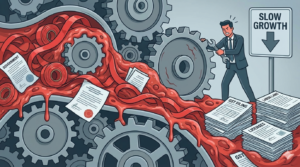
1. The Compliance Trap: “Regulatory Cholesterol”
In the US, you can often start a company in a single day. In India, you aren’t just fighting your competitors; you’re fighting the system. Entrepreneurs in India spend roughly 20% of their time just managing government compliances [01:11].
-
The Burden: GST filings, labor laws, fire safety permits, and various local regulations.
-
The Result: This “regulatory cholesterol” drains an entrepreneur’s energy and resources long before they have even acquired their first customer [01:32].
2. The “Three Indias” Problem
One of the biggest mistakes founders make is treating India as a single, homogenous market. In reality, there are three distinct segments:
-
India 1: 30–40 million people who spend like Europeans and don’t think twice about luxury or convenience [02:01].
-
India 2 & 3: The middle and lower-middle classes who are extremely price-sensitive and must plan months in advance for even small domestic trips [02:06].
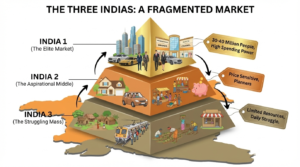
The Scaling Nightmare: A product priced for Delhi or Mumbai often won’t sell in rural Bihar. To scale, businesses must reinvent their logistics, marketing, and unit economics almost every 500 kilometers [03:02].
3. The Execution Gap and the “Lala” Mindset
A significant portion of Indian businesses (nearly 75–80%) operate with a “Lala Mindset” [03:09].
-
Micro-management: Founders often want to control every tiny decision, preventing the business from becoming a self-sustaining system.
-
Lack of Structure: There is often a lack of detailed planning. Many businesses operate on a basic “buy for $X, sell for $Y” logic without departmental segregation or professional systems [03:55].
-
The Talent Gap: While founders may look for MBAs, the actual skill level often doesn’t match the qualification. This means your business model and marketing must be so robust that even an “ordinary” team can execute it successfully [04:15].
4. The Brutal Cash Flow Crunch
In India, “Profit is King, but Cash is Queen.” The credit cycle is notoriously difficult.
-
Payment Delays: Small businesses often wait 90 to 120 days to receive payments from large corporations or government entities [05:12].
-
Long Conversion Windows: Even in service industries (like marketing agencies), the decision-making process for a client can take 30 to 60 days, leading to a massive cash flow gap while operational costs remain fixed [06:04].
5. The VC Funding Reality
The video points out that without deep pockets or Venture Capital (VC) funding, surviving the “market capture” phase is nearly impossible for modern tech startups [06:48]. Companies like Swiggy have operated at a loss for years just to maintain market share. For a bootstrapped entrepreneur, this level of burn is simply not an option.
Final Takeaway: How to Win in India
If you can build a successful business in India, you can build it anywhere in the world. However, to survive the “difficulty filter,” you must follow these rules:
-
Prioritize Unit Economics: Your business should ideally be profitable from Day 1 or Month 1 [08:13].
-
Choose the Right Model: Unique or highly creative models often require VC backing. If you are bootstrapping, traditional sectors like FMCG, Entertainment, or “Copycat” business models tend to have a higher survival rate in the Indian landscape [08:30].